Use this commercial fire inspection checklist to stay compliant, identify risks early, and know when to handle issues in-house or call fire protection professionals.
Managing a commercial property comes with constant moving parts. Between operations, tenants, compliance requirements, and safety responsibilities, fire protection can easily become something you only think about when an inspection is coming up.
That approach creates risk.
Fire protection systems are active safety components that require ongoing attention. They are affected by day-to-day activities such as storage changes, equipment movement, renovations, and general wear over time. A blocked sprinkler head, a closed valve, or a malfunctioning alarm panel is not always obvious, but it can have serious consequences if left unaddressed.
This is where a commercial fire inspection checklist becomes essential. It gives facility managers a structured, repeatable process to stay ahead of issues instead of reacting to them.
For industries like those below, the stakes are especially high.
- Warehousing and distribution centers
- Manufacturing facilities
- Healthcare and medical offices
- Retail and shopping centers
- Hospitality properties such as hotels and resorts
- Office buildings and mixed-use developments
These environments often involve high occupancy, valuable assets, or complex layouts that depend heavily on properly functioning fire protection systems.
A consistent checklist helps bridge the gap between formal inspections and daily operations. It allows your team to spot issues early, maintain safer conditions, and ensure your building is always closer to compliance, not scrambling to meet it.
How Often Should You Use a Fire Inspection Checklist?
Your checklist should be used regularly, not just before an inspection. A practical schedule looks like this:
- Weekly or bi-weekly: Quick visual walkthroughs of key components
- Monthly: More detailed checks of accessible system elements
- Before inspections or audits: Full review of all checklist items
Consistent use helps you stay ahead of problems instead of reacting to them.
What Facility Teams Can Handle vs. When to Call the Pros
Not every fire protection task requires a licensed technician, but knowing the line is critical.
Tasks Facility Managers Can Typically Handle
These are visual and basic checks that do not require system adjustments:
- Ensuring sprinkler heads are not blocked or damaged
- Checking that fire extinguishers are visible and accessible
- Verifying that exit signs and emergency lighting are functioning
- Confirming storage is not obstructing fire protection equipment
- Looking for visible leaks or corrosion
These routine checks are exactly where a commercial fire inspection checklist adds value.
When to Call Fire Protection Professionals
Licensed professionals (like those at DynaFire) must handle certain tasks to remain compliant with codes such as NFPA standards. Call in experts for:
- System testing and inspections
- Fire alarm diagnostics or troubleshooting
- Sprinkler system repairs or modifications
- Fire suppression system issues
- Fire pump testing and maintenance
- Code compliance evaluations
Attempting to handle these internally can lead to compliance issues or system failure.
The Commercial Fire Inspection Checklist
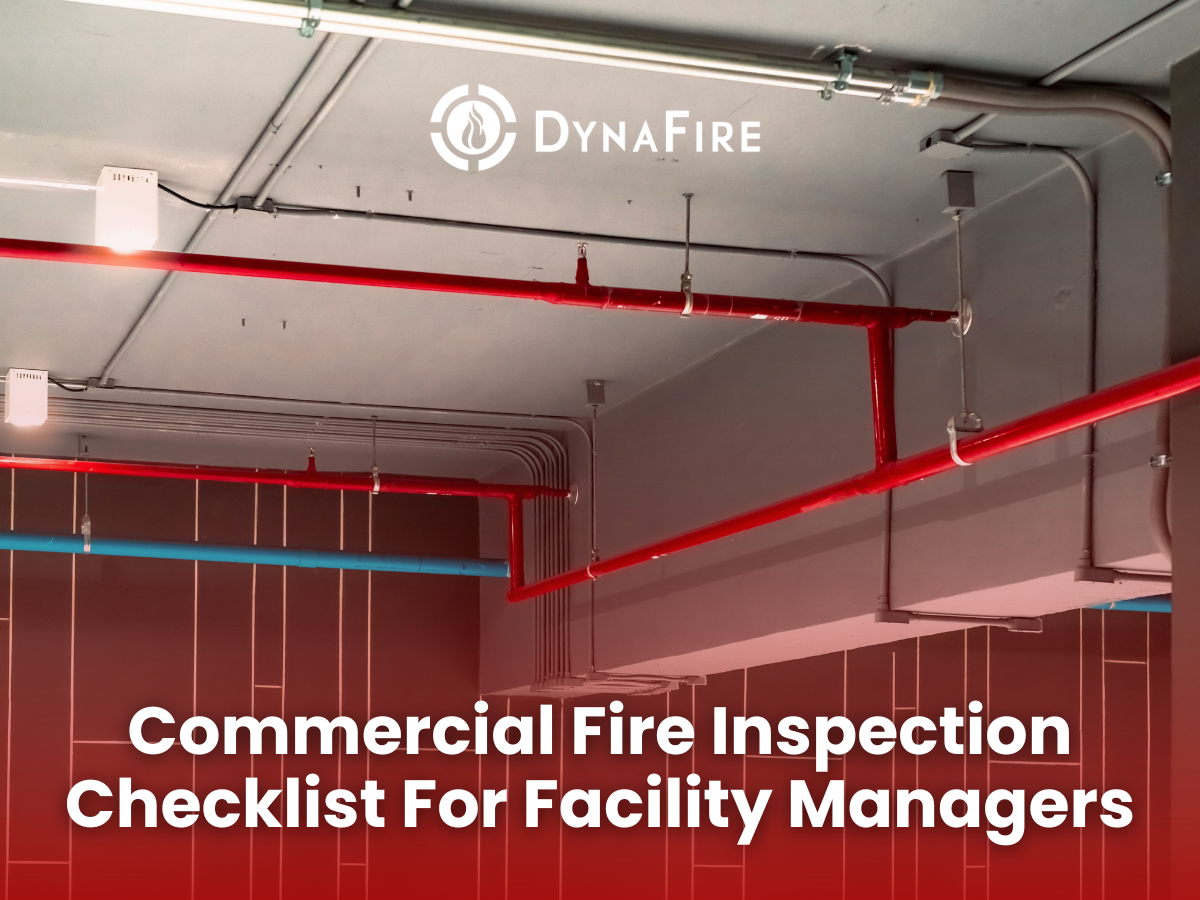
Use this checklist during your regular facility walkthroughs to keep your building safe and inspection-ready.
Fire Sprinkler System
- Sprinkler heads unobstructed and free of damage
- No paint, dust, or corrosion on sprinkler heads
- Proper clearance maintained below sprinkler heads
- Control valves accessible and in the correct position
- No visible leaks in piping
Fire Alarm System
- Control panel shows normal operation with no trouble signals
- Pull stations are visible and unobstructed
- Smoke and heat detectors are clean and undamaged
- Alarm devices such as horns and strobes are unobstructed
Fire Extinguishers
- Fire extinguishers are clearly visible and accessible
- Pressure gauges are in the correct range
- No signs of physical damage
- Inspection tags are up to date
Exits and Emergency Lighting
- Exit doors are unobstructed and easy to open
- Exit signs are illuminated and functioning
- Emergency lighting operates properly during testing
- Pathways to exits are clear of storage or debris
Electrical and Equipment Areas
- Electrical panels have proper clearance
- No exposed wiring or obvious hazards
- Equipment rooms are free of excess storage
- Flammable materials are stored properly
General Fire Safety Conditions
- No blocked fire lanes or access points
- Housekeeping is maintained to reduce fire load
- No improper use of extension cords
- Storage heights comply with fire code requirements
Common Issues This Checklist Helps Prevent
Using a commercial fire inspection checklist regularly helps you avoid:
- Failed fire inspections
- Obstructed or inoperable systems
- Missed maintenance needs
- Code violations and fines
- Increased fire risk due to poor housekeeping
Small issues caught early are much easier and less expensive to fix.
Make Fire Safety Part of Your Routine
Fire protection is an ongoing responsibility. A checklist (including this fire watch checklist) keeps your team aligned, your systems visible, and your facility prepared. But it does not replace professional service; it works alongside it.
Contact us today to schedule a full inspection, testing, or maintenance service and ensure your facility stays compliant, protected, and ready for any emergency.