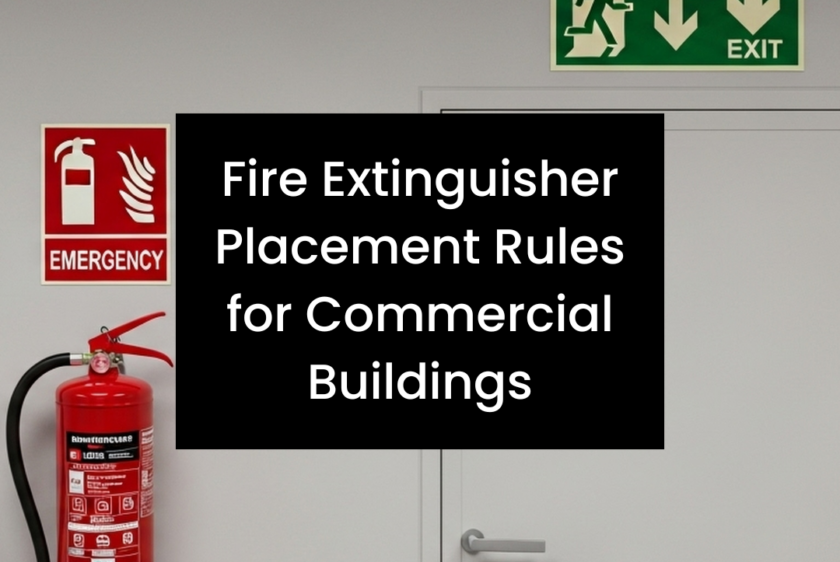
Fire extinguisher placement requirements for commercial buildings explained. Learn NFPA rules for distance, mounting height, visibility, and inspection compliance.
Fire extinguishers are one of the most commonly inspected—and most frequently cited—fire protection components in commercial buildings. While most businesses know fire extinguishers are required, many fail inspections because their units are improperly placed, inaccessible, or not installed in accordance with code.
Understanding fire extinguisher placement requirements is essential for maintaining compliance, passing inspections, and ensuring occupants can respond quickly during the early stages of a fire. Below, we break down what commercial property owners and facility managers need to know, based on NFPA standards and real-world inspection findings.
What Codes Govern Fire Extinguisher Placement?
Commercial fire extinguisher placement is primarily governed by NFPA 10: Standard for Portable Fire Extinguishers, which is adopted and enforced by most state and local fire authorities. OSHA also references NFPA 10 for workplace fire extinguisher requirements.
While local AHJs may add requirements, NFPA 10 establishes the baseline rules inspectors use when evaluating placement during commercial fire inspections.
Fire Extinguisher Distance Requirements
One of the most common placement violations involves travel distance. NFPA 10 limits how far an occupant should have to travel to reach a fire extinguisher.
General commercial requirements include:
- Class A hazards (ordinary combustibles): Maximum travel distance of 75 feet
- Class B hazards (flammable liquids): Maximum travel distance of 30–50 feet, depending on hazard severity
- Commercial cooking (Class K): Fire extinguishers must be located within 30 feet of cooking equipment
Fire extinguishers should also be distributed based on floor area. As a general guideline, one Class A fire extinguisher typically covers up to 3,000 square feet, depending on occupancy and hazard classification.
Improper spacing—especially in storage rooms, mechanical areas, and dead-end corridors—is a frequent cause of inspection failures.
Mounting Height and Installation Rules
Mounting height is another area where commercial buildings frequently fail to comply with fire extinguisher placement requirements.
NFPA 10 specifies mounting height requirements based on fire extinguisher weight. Fire extinguishers weighing 40 pounds or less must be installed so that the top of the unit is no more than 5 feet above the floor, with the bottom at least 4 inches off the ground. For fire extinguishers weighing more than 40 pounds, the maximum mounting height is reduced to 3.5 feet, while maintaining the same minimum 4-inch clearance from the floor.
Units must be mounted on approved brackets, cabinets, or wall hangers that can support the fire extinguisher’s weight. Improvised mounting solutions or unsecured units are routinely cited during inspections.
Visibility and Accessibility Requirements
Fire extinguishers must be:
- Clearly visible
- Unobstructed
- Accessible without moving furniture, inventory, or equipment
Inspectors regularly cite fire extinguishers blocked by shelving, office furniture, stacked inventory, or decorative features. If a fire extinguisher cannot be accessed immediately, it is considered non-compliant—even if it is properly charged and inspected.
Best practices include:
- Installing signage above fire extinguisher locations
- Maintaining clear access paths at all times
- Re-evaluating placement after layout or operational changes
Placement Considerations for Different Commercial Environments
Different commercial occupancies present different placement challenges:
- Warehouses: Changing inventory frequently blocks fire extinguishers
- Office spaces: Furniture reconfigurations alter access paths
- Restaurants: Class K units must be appropriately located without interfering with operations
- Manufacturing facilities: Higher-risk areas require tighter spacing and specialized fire extinguisher types
Fire extinguisher placement should be reviewed whenever operational changes occur—not just at inspection time.
Common Fire Extinguisher Placement Violations Inspectors Cite
During commercial inspections, the most frequent placement-related violations include:
- Fire extinguishers mounted too high
- Units blocked or partially obstructed

- Exceeded travel distance limits
- Incorrect fire extinguisher type for the hazard
- Fire extinguishers placed too close to the fire hazard they are meant to address
- Missing or unreadable signage
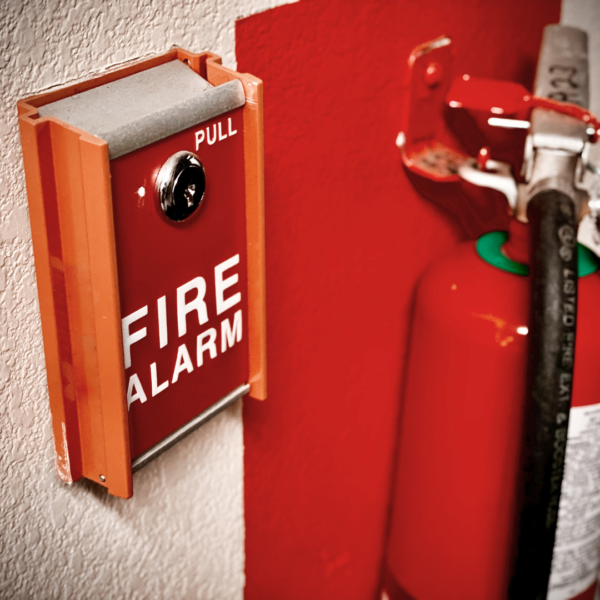
These issues often coexist with other fire safety deficiencies identified during inspections of fire alarms, fire sprinklers, and fire suppression systems.
Inspection, Documentation, and Ongoing Compliance
Fire extinguisher placement is evaluated alongside inspection and maintenance compliance.
Commercial buildings are expected to maintain:
- Monthly visual inspections (documented)
- Annual professional inspections
- Clear inspection tags and service records
Missing documentation can result in violations even when fire extinguishers are physically compliant.
Placement reviews are commonly coordinated with broader fire system testing and maintenance programs, including fire alarm and fire sprinkler inspections.
Why Placement Should Be Part of a Larger Fire Protection Strategy
Fire extinguishers are a first line of defense—but only if they are correctly placed, accessible, and maintained. Placement decisions should align with:
- Building layout
- Occupant movement patterns
- Fire alarm coverage
- Fire sprinkler and fire suppression system design
Commercial fire risks change over time. Placement that was compliant years ago may no longer meet code requirements due to renovations, occupancy changes, or operational growth.
Professional Evaluation Makes the Difference
Because placement violations are among the most preventable inspection failures, professional assessments play a critical role in preventing them. Fire protection specialists like those at DynaFire evaluate fire extinguisher placement in the context of your entire Fire & Life Safety system—not just code minimums.
Routine evaluations help ensure fire extinguishers remain compliant, accessible, and effective as your building evolves.
Contact us today if you are unsure whether your fire extinguisher placement meets current fire extinguisher placement requirements. A professional review can identify issues before they become inspection failures.