A year-end fire safety audit ensures your commercial building starts the new year protected, compliant, and fully prepared. Learn what to include in your inspection.
When December rolls around, property managers are juggling budgets, tenant requests, and compliance tasks—and fire safety often slides to the bottom of the list. However, the truth is that scheduling a year-end fire safety audit now can make your life easier. It’s your building’s version of a year-end checkup—helping you catch minor issues before they become code violations or emergencies.
December is also one of the most practical times for fire system maintenance. Many offices and retail spaces experience slower operations around the holidays, giving you a window to test systems, inspect equipment, and correct problems without interrupting business. Here’s how to get started with your year-end fire safety audit.
Step 1: Audit Your Emergency Procedures
Fire safety starts with people, not systems. A great year-end audit begins with your staff and emergency plans.
- Update emergency action plans. Are routes and exits clearly marked and unobstructed? Are assembly points still accurate?
- Verify training. Many employees haven’t reviewed emergency procedures since their first week on the job. A short refresher goes a long way.
- Check your contact lists. Outdated phone numbers or emergency contacts can slow response times when seconds matter.
- Support visitors and temporary staff. Clear signage and evacuation maps help everyone navigate the building safely, even if they’re unfamiliar with it.
A quick team refresher this month ensures everyone knows their role in the event of an emergency—making your systems more effective when it counts.
Step 2: Address Environmental and Building-Specific Risks
Every commercial property faces its own set of environmental and operational challenges that can affect fire protection systems over time. Your year-end fire safety audit should include a thorough examination of these factors to ensure reliability throughout every season.
- Moisture and temperature fluctuations can corrode metal components, weaken wiring, and impact alarm system sensitivity.
- The age and layout of a building can influence how systems perform—older wiring, renovations, or changes in storage may create new vulnerabilities.
- Emergency communication systems (such as BDA systems) should be tested regularly to confirm that first responders can maintain radio contact throughout the building. Learn more about BDA system requirements.
A December inspection helps you identify and correct these risks before they compromise safety or compliance in the new year.
Step 3: Watch for Red Flags That Need Immediate Action
During your walkthrough, prioritize these issues—they’re not problems to put off until January:
- Fire alarm panels showing “trouble” or communication failures
- Missing or damaged fire extinguishers
- Blocked, locked, or obstructed emergency exits
- Leaks or water damage near sprinkler piping
- Fire-rated doors that don’t latch or close automatically
Addressing these problems immediately not only protects your building but also prevents citations during official inspections.
Step 4: Schedule Professional Inspections and Testing
Your fire alarm, fire sprinklers, fire extinguishers, and monitoring systems are the heart of your building’s fire protection strategy— and they require expert attention. A year-end fire safety audit is the perfect time to bring in certified professionals to inspect, test, and document every component for code compliance and reliability.
Fire Alarm Systems
Professional technicians will:
- Examine your fire alarm control panel for any active trouble or supervisory signals that may indicate communication or wiring issues.
- Test horns, strobes, and speakers to confirm proper activation and audibility throughout the building.
- Verify that your alarm monitoring connection is stable and responsive.
If your building has experienced recent power fluctuations or electrical upgrades, your contractor can also conduct a full fire alarm system inspection to ensure every circuit and notification device is operating as intended.
Fire Sprinkler Systems
Certified inspectors will:
- Perform a fire sprinkler obstruction investigation to check for issues that can impact performance.
- Confirm that storage, shelving, or decorations maintain the required 18-inch clearance below sprinkler heads.
- Conduct water pressure and flow tests to verify your system can deliver adequate coverage during an emergency.
Fire Extinguishers and Fire Suppression Equipment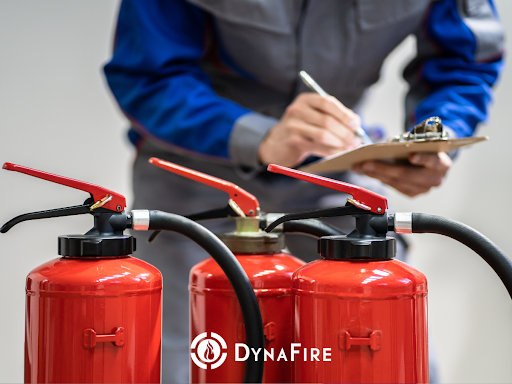
Fire protection professionals should:
- Inspect all extinguishers to ensure they have current inspection tags, are at proper pressure levels, and exhibit physical integrity.
- Replace or recharge any damaged or underpressurized units.
- Test specialized suppression systems, such as kitchen hoods or clean agent systems, to ensure they’re fully charged and ready for rapid response.
For more on inspection requirements, visit our guide on fire protection system inspections.
Don’t Wait Until The Ball Drops: Schedule Your Year-End Fire Safety Audit Today
The best time to address fire safety isn’t after an emergency—it’s before one happens. A professional year-end fire safety audit gives you confidence that every alarm, sprinkler, and extinguisher in your building is ready to protect what matters most.
Don’t wait for January’s rush. Contact us today to schedule your audit with DynaFire and step into the new year knowing your property is safe, compliant, and ready for anything.