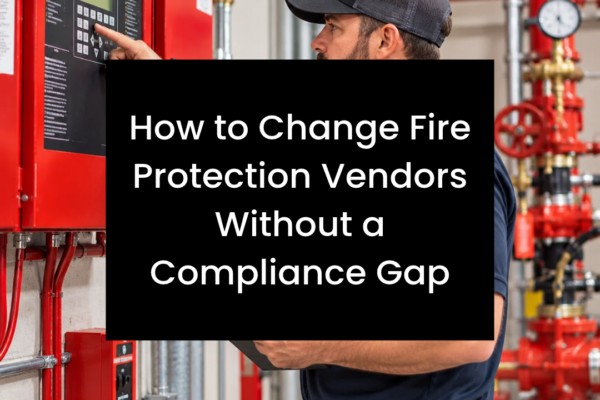
Switching fire protection companies takes planning, especially when your building relies on multiple systems and recurring service requirements. A poorly coordinated transition can lead to missed inspections, incomplete records, or unresolved equipment issues.
Whether you’re dissatisfied with your current provider or want to simplify fire protection management, a few practical steps can help you switch without interrupting essential services.
Why Do Businesses Switch Fire Protection Companies?
Businesses change fire protection vendors for several reasons, including:
- Inconsistent service or slow response times
- Missed inspections or scheduling difficulties
- Poor communication or incomplete documentation
- Increasing costs or unclear billing
- The need for a provider that handles multiple fire protection systems
- Expanding operations or managing properties in multiple locations
Whatever the reason, your compliance responsibilities remain when you change providers.
How to Switch Fire Protection Companies Without Interrupting Compliance
- Review Your Current Contracts And Service Schedule
Start by reviewing your existing agreements, including cancellation terms, notice periods, and covered services.
Identify upcoming inspection deadlines and see whether any scheduled work falls near your transition date. Changing providers does not reset the requirements established by applicable fire codes and standards.
Reviewing your current fire protection system inspection needs can also help you prioritize services during the transition.
- Gather Your Fire Protection Records
Your new provider needs an accurate picture of your existing equipment and service history.
Collect recent inspection reports, equipment documentation, maintenance records, and any outstanding deficiency notices. Include information about recent repairs, system modifications, or ongoing problems.
Missing records can make it harder to verify completed work or determine what needs attention next.
- Confirm Your New Provider Can Service Your Equipment
Not every fire protection company handles every system.
Before signing a new agreement, confirm the provider has the qualifications, licensing, and experience to service your equipment.
Depending on your facility, you may need support for fire sprinkler systems, fire alarms, specialized suppression systems, fire pumps, fire extinguishers, or other life safety equipment.
Choosing a company that can manage several systems may reduce the number of vendors your facility needs to coordinate.
- Resolve Outstanding Deficiencies
Review previous inspection findings and identify any incomplete repairs.
Make sure your new provider understands the status of open deficiencies, including corrective work already scheduled or underway.
Some issues may require additional coordination with the Authority Having Jurisdiction (AHJ), particularly if a required system is impaired.
The transition should not delay urgent repairs or leave critical equipment without appropriate protection.
- Establish A Clear Transition Date
Determine when your new provider will assume responsibility for scheduled service, emergency calls, and outstanding work.
Confirm that required fire alarm monitoring remains active and coordinate any necessary changes to communication equipment, monitoring arrangements, or emergency contact information before the transition.
Document who is responsible for each service during the handoff to avoid uncertainty if a problem occurs.
- Establish Your New Service Plan
After the transition, review your facility’s upcoming requirements with the new provider.
Confirm inspection dates, service request procedures, how deficiencies will be reported, and where completed records will be stored.
A clear plan gives facility managers a consistent process for managing fire protection responsibilities moving forward.
Fire Protection Vendor Transition Checklist
Use this checklist before ending service with your current provider.
- Review existing contracts and cancellation requirements.
- Identify all fire protection systems and current service providers.
- Gather inspection reports, equipment records, and system documentation.
- Confirm upcoming inspection and testing deadlines.
- Verify the new provider’s qualifications and service capabilities.
- Review outstanding deficiencies and pending repairs.
- Confirm uninterrupted fire alarm monitoring, if applicable.
- Establish a firm transition date and emergency service contact.
- Schedule upcoming service with the new provider.
- Confirm where future reports and documentation will be maintained.8
Tip: Keep a copy of your completed checklist with your facility’s fire protection records. It can serve as a reference if questions arise about the transition or responsibility for outstanding work.
Make Your Next Fire Protection Provider A Better Fit
Switching fire protection companies can improve service, communication, and the way your facility manages ongoing fire safety responsibilities. The key is making sure existing requirements and unresolved issues are accounted for before the transition is complete.
DynaFire provides comprehensive commercial fire protection services, helping property owners and facility managers manage their systems through a single experienced provider.
Considering a change in fire protection vendors? Contact us today to discuss your existing systems, upcoming service needs, and how our team can help coordinate a smooth transition.