Learn what a fire pump preventive maintenance schedule should include, from routine inspections and testing to annual maintenance that helps prevent failures and deficiencies.
A fire pump may sit quietly for months, but when a fire occurs, it needs to deliver the water pressure and flow your fire protection system was designed to provide. Regular maintenance helps identify problems before they become system failures, inspection deficiencies, or expensive emergency repairs.
A consistent fire pump preventive maintenance schedule also helps building owners and facility managers stay ahead of required inspection and testing obligations.
Why Fire Pump Preventive Maintenance Matters
Fire pumps are critical when a building’s sprinkler system needs additional water pressure or flow. Problems with the pump, driver, controller, valves, or related equipment can affect the performance of the entire fire protection system.
Preventive maintenance helps uncover issues such as:
- Leaking components
- Corrosion
- Low battery voltage
- Worn bearings or seals
- Fuel or oil problems
- Valve issues
- Electrical problems
- Reduced pump performance
Finding these issues during routine maintenance allows property owners to correct them before an inspection or emergency exposes the problem.
What Should a Fire Pump Maintenance Schedule Include?
Fire pump maintenance involves more than an annual service visit. NFPA 25 establishes inspection, testing, and maintenance requirements at different intervals, depending on the equipment and system.
A typical maintenance program may include the following:
Weekly Inspections and Checks: Facility Personnel
Facility personnel can perform routine visual checks to identify obvious problems between professional service visits. These checks may include:
- Pump room conditions
- Suction and discharge pressure readings
- Valve positions
- Controller status
- Fuel levels for diesel-driven pumps
- Battery condition
- Signs of leaks or other visible issues
These routine checks can help identify developing problems early. If anything appears abnormal, a qualified fire protection professional should evaluate the equipment.
Monthly Checks: Facility Personnel And Professionals
Some monthly checks may be performed by trained facility personnel, while others require qualified fire protection professionals depending on the equipment and applicable requirements.
Facility personnel may monitor items such as fuel levels, battery condition, and general equipment condition. Professional technicians may be needed for more technical inspection, testing, or maintenance tasks.
Regular attention is especially important for diesel-driven pumps because fuel, batteries, and engine components can deteriorate over time.
Annual Fire Pump Testing: Qualified Professionals
Annual fire pump testing should be performed by qualified fire protection professionals. The pump is operated under different flow conditions to verify that it can deliver the required pressure and water volume.
Annual testing can help identify:
- Reduced pump capacity
- Pressure problems
- Mechanical issues
- Water supply deficiencies
- Controller or driver problems
Testing provides a performance snapshot that can reveal issues that may not be apparent during a visual inspection.
Pump Room Assessment: Facility Personnel And Professionals
Facility personnel should keep the pump room clean, accessible, and free from conditions that could interfere with equipment operation. The pump room should be:
- Free of unnecessary storage
- Properly heated or maintained at the required temperature
- Accessible to authorized personnel
- Protected from conditions that could damage equipment
- Adequately illuminated
Qualified professionals should evaluate equipment and address technical issues identified during inspections or testing.
A well-maintained pump room makes it easier to identify problems and gives technicians safe, unobstructed access to critical equipment when service is needed.
How Preventive Maintenance Helps Avoid Failed Inspections
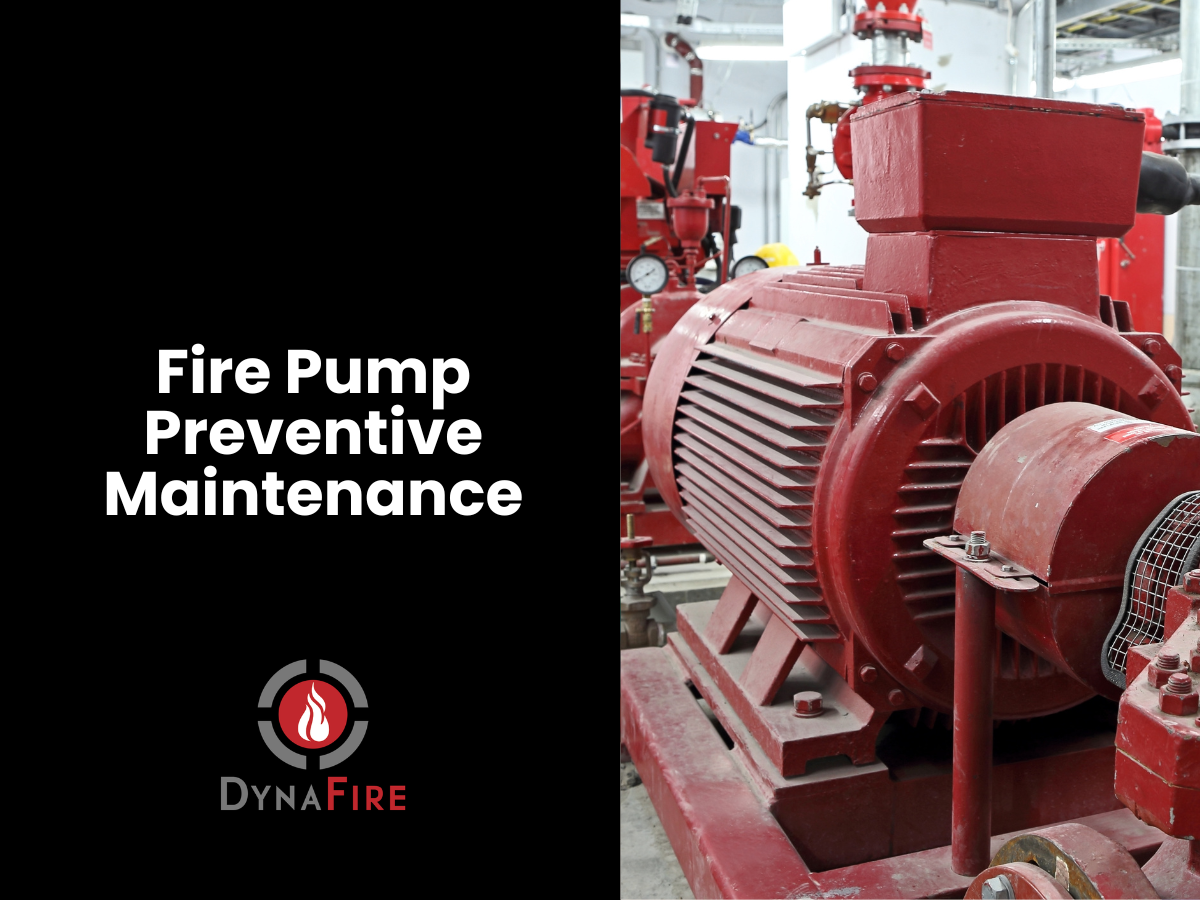
Preventive maintenance and inspection serve different purposes, but they work together.
An inspection determines whether equipment meets applicable requirements at a particular point in time. Maintenance focuses on keeping the equipment in proper working condition between inspections.
Following a regular maintenance schedule helps property owners address problems before they become inspection deficiencies.
It also provides an opportunity to identify components that may be nearing the end of their useful life and plan repairs or replacement rather than dealing with an unexpected failure.
Keep Your Fire Pump Ready When It Matters
Regular inspection, testing, and maintenance help keep your fire pump reliable and ready to support your fire protection system when needed. A consistent fire pump preventive maintenance schedule can also help identify deficiencies early and reduce unexpected repairs. Also, brush up on your preparedness skills for National Preparedness Month!
DynaFire can help commercial property owners evaluate their fire pump maintenance needs and keep critical equipment operating reliably.
Need to get your fire pump maintenance on schedule? Contact us today to discuss your system.