Learn what building owners should know about integrating fire alarm and access control systems, including egress, door release, system coordination, and testing.
Fire alarm and access control systems serve different purposes, but they can intersect at one of the most important parts of a commercial building: its doors.
Access control helps restrict who can enter secured areas, while fire and life safety requirements help ensure occupants can safely exit during an emergency. Depending on the type of locking arrangement, the fire alarm system may also need to initiate specific door functions when an alarm occurs.
For building owners, integrating fire alarm and access control systems requires careful coordination so security features do not interfere with required egress or life safety functions.
Does The Fire Alarm Have To Unlock Access-Controlled Doors?
Sometimes, but not always.
The International Building Code includes several different types of electrically locked egress door arrangements, and their requirements are not identical.
For example, certain sensor-release electrically locked doors must automatically unlock when the building fire alarm system, automatic sprinkler system, or fire detection system activates. They must also unlock if power to the locking system is lost.
Other permitted locking arrangements use door hardware that directly interrupts power to the electric lock when an occupant operates it. These systems have their own requirements and do not necessarily depend on a fire alarm signal for release.
That is why access-controlled doors should be evaluated based on the specific hardware, occupancy, egress function, and locally adopted code rather than assuming every electronic lock should operate the same way.
Life Safety And Egress Come First
Access control needs can vary significantly by building type. Healthcare facilities may restrict access to patient care, pharmacy, or staff areas, while data centers often require additional security around critical equipment and infrastructure.
Regardless of the building, access control cannot prevent people from safe emergency evacuation during an emergency. When secured doors are part of a means of egress, fire and life safety requirements may affect how they are allowed to operate. Depending on the application, this can include:
- Electrically locked egress doors
- Magnetic locking systems
- Delayed egress locking systems
- Stairway doors
- Elevator lobby doors
- Other secured doors within a means of egress
Requirements can vary based on the type of door, locking arrangement, occupancy, and fire protection systems within the building.
Building owners planning new access control equipment or changes to existing doors should consider fire alarm and egress requirements before installation.
What Happens During A Fire Alarm?
The response depends on how the building and locking system are designed.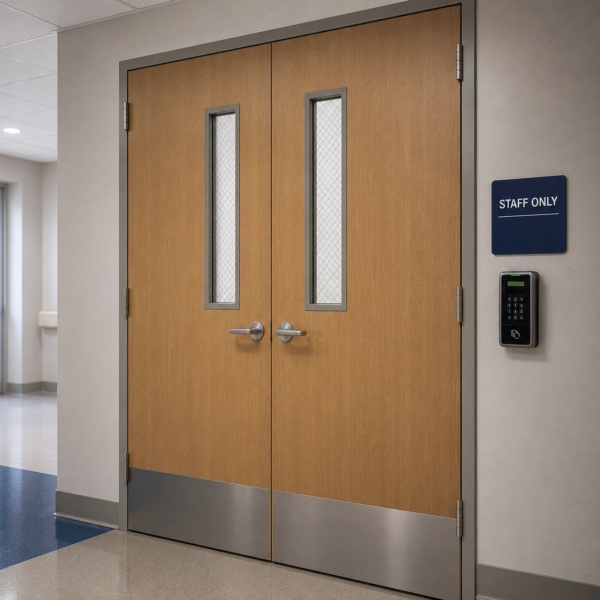
For some access-controlled doors, the fire alarm system sends a signal that automatically unlocks the door during an emergency. The door may remain unlocked until the fire alarm system is reset.
Other doors use hardware that allows occupants to exit without relying on the fire alarm system to unlock the door.
Because these requirements vary, the fire alarm system, access control equipment, and door hardware need to be coordinated during the design process. That helps ensure each door responds correctly during an emergency while maintaining required egress.
How System Changes Can Affect Fire Alarm Integration
Fire alarm and access control equipment are often designed or serviced by different contractors. Without proper coordination, one system can be modified without considering how the change affects the other.
For example, replacing door hardware, adding electronic locks, renovating an entrance, or upgrading an access control system could affect an existing fire alarm interface.
Coordination helps ensure that:
- Required door release functions operate correctly
- Fire alarm signals reach the appropriate interfaced equipment
- Access control changes do not interfere with required egress
- System programming reflects the intended sequence of operations
- Integrated functions can be properly tested
Planning how the systems will work together early can also reduce complications during inspections and acceptance testing. After installation or system changes, testing should confirm that access-controlled doors respond correctly to the required fire alarm signals. It can also identify programming, wiring, or equipment problems that could prevent the systems from working together as intended.
Plan Fire Alarm Integration Before Making Changes
Before changing electronic locks or access control equipment, consider how the project could affect required fire alarm functions, emergency egress, and local code requirements.
DynaFire works with property owners and project teams to help ensure fire alarm connections are properly designed and tested.
Planning changes to your access control or fire alarm system? Contact us today to discuss your fire protection requirements.